The workspace where people and AI agents work as one team.
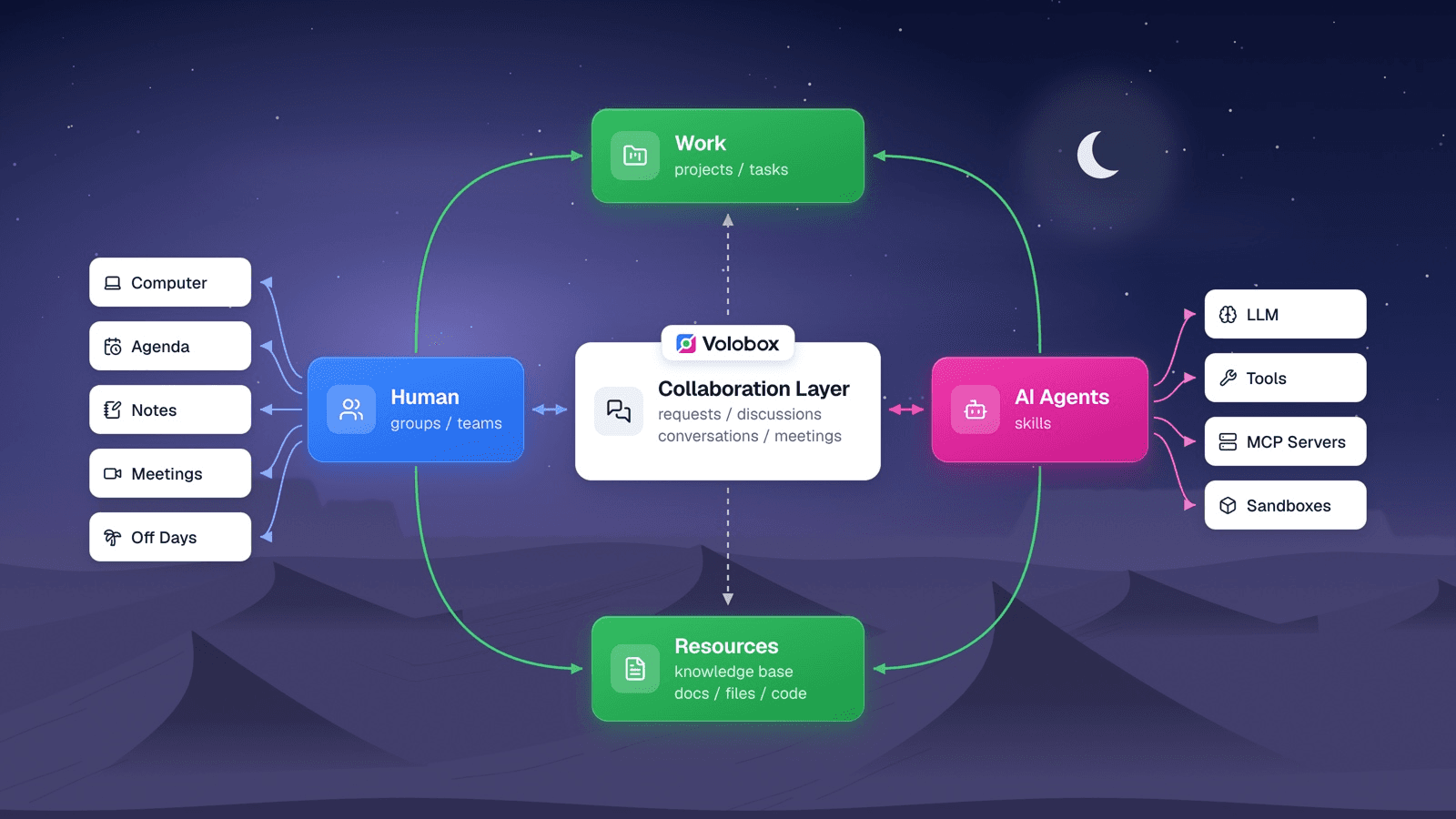
Plan projects, chat, and write docs in one place. Give tasks to AI agents the same way you give them to people. You control what each agent can do.
Free demo, same-day setup, 30-day free trial · Cloud or on-premise · Models included, or bring your own
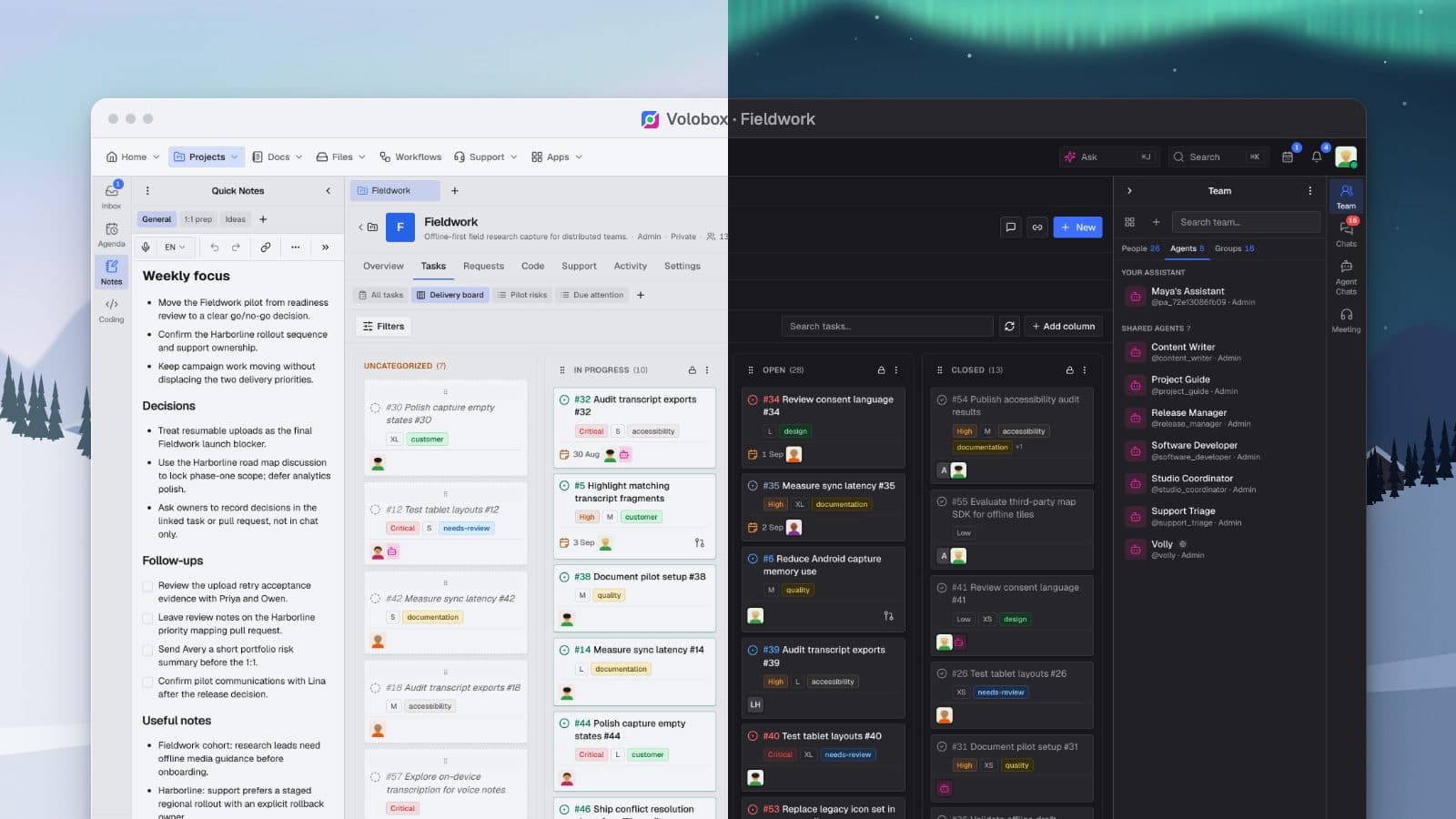
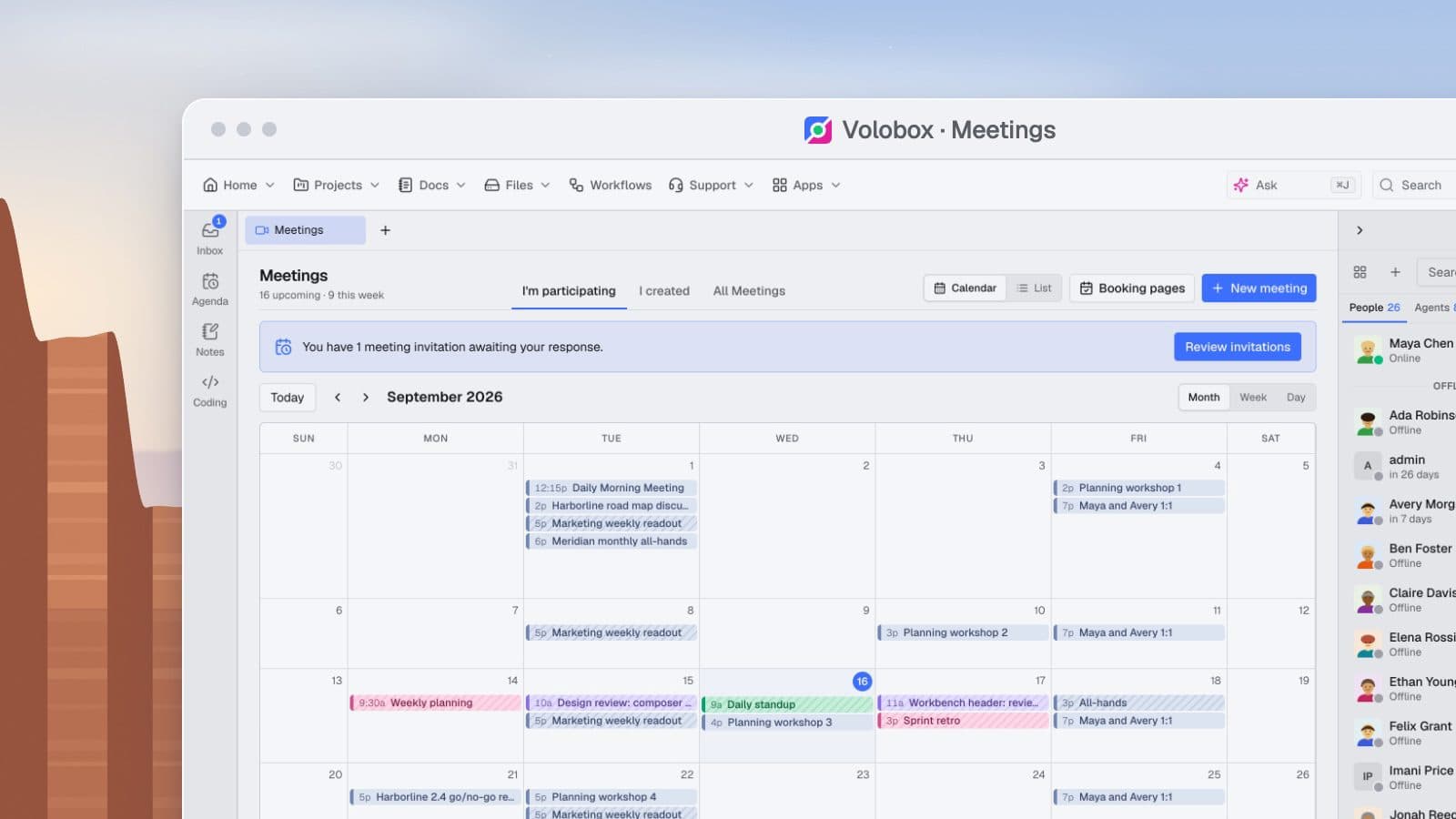
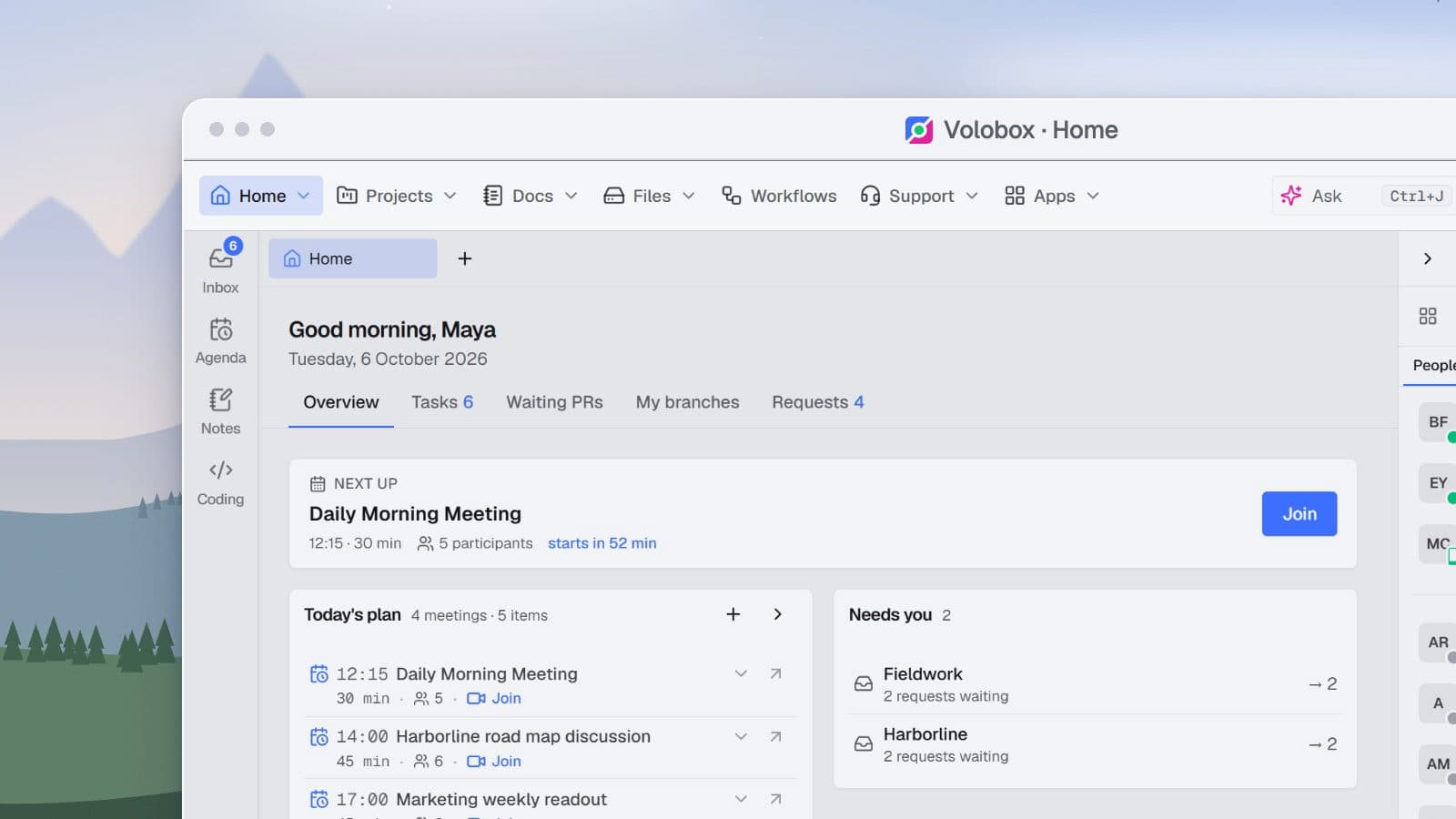
Volobox · Home
Your day in one view: your meetings, your work, and what your agents did overnight.
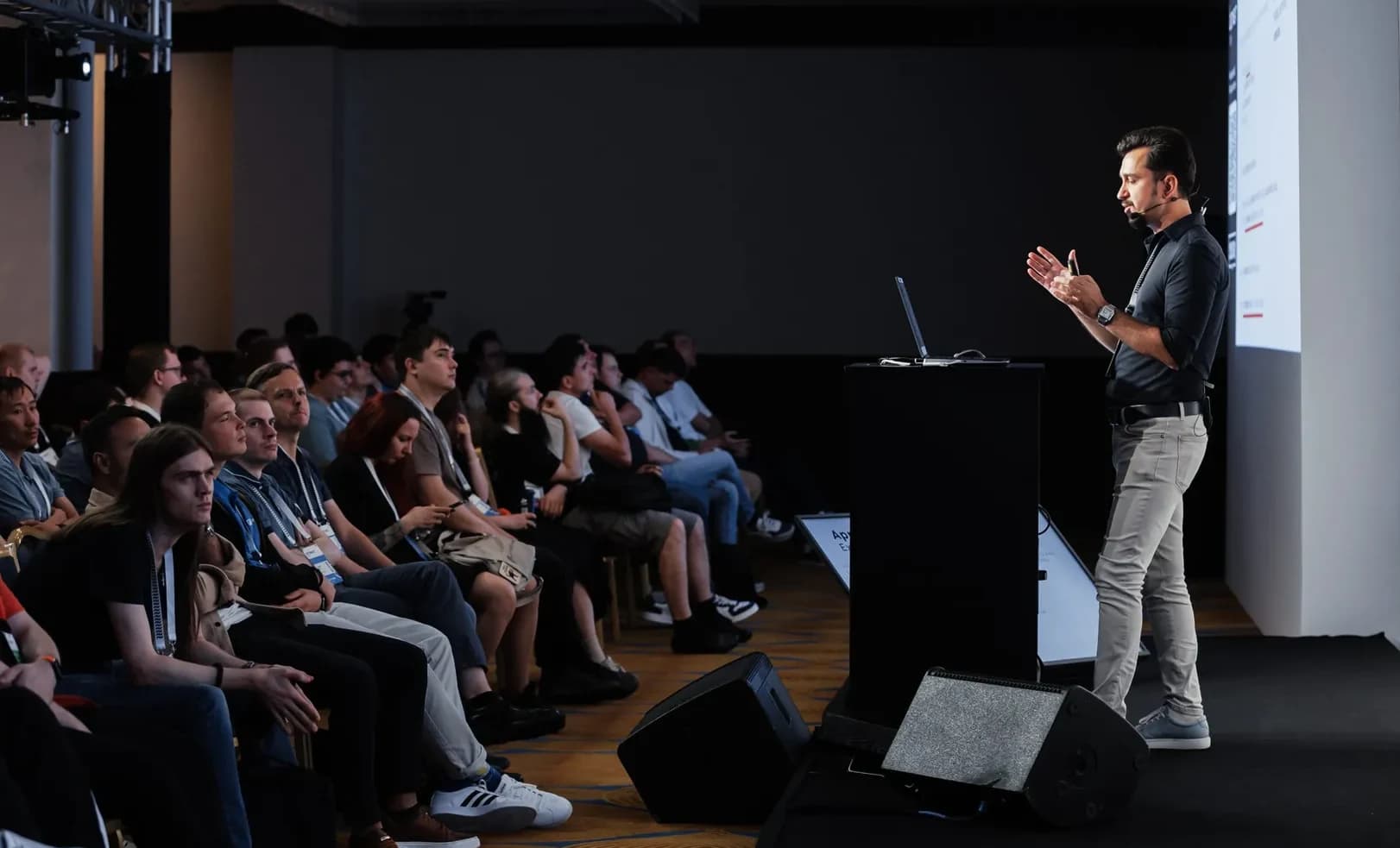
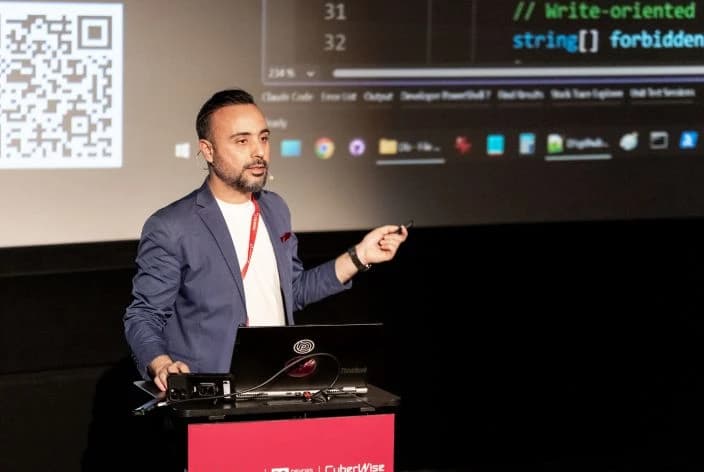
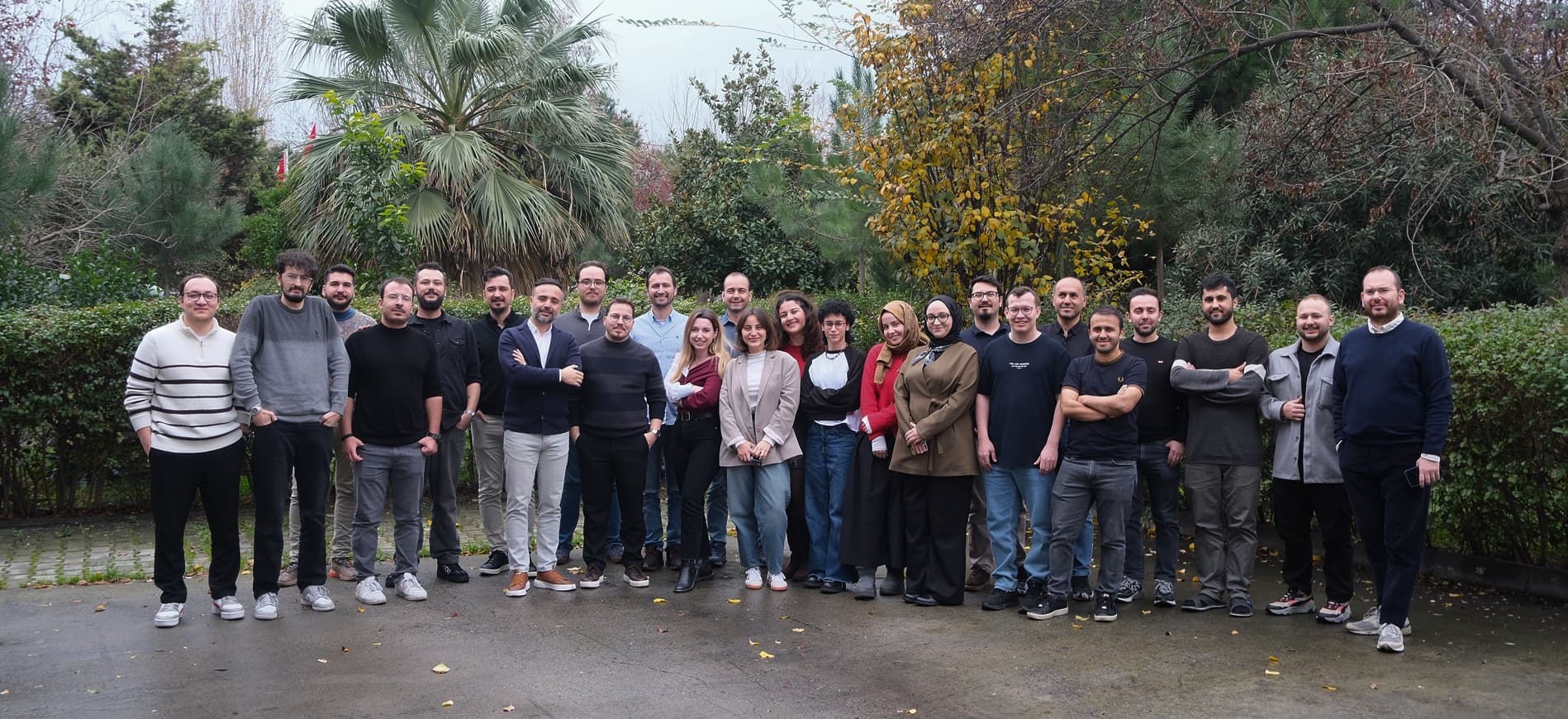
The people who make Volobox.
We built the ABP Framework, an open source platform other teams build on. Now we build Volobox for companies where agents are teammates from day one.
- Building open source developer platforms
- Since 2013
- NuGet downloads of our open source packages
- 2B+
- GitHub stars on the ABP Framework
- 14k+
- Countries with customers of Volosoft products
- 137
Where it starts
It starts with work everyone can see.
We run our own company on Volobox. The first thing it changed had nothing to do with AI: our work became visible, and we stopped asking each other where things stood.
“Where are we on this?”
Every task, request, and ticket keeps its Story: where it came from, what it became, and who did what along the way.
“Where was that decided?”
Work threads keep the conversation on the task, request, or pull request it is about. Spotlight finds the rest.
“What needs me today?”
One Inbox holds everything that needs you, and Agenda lays out your day across tasks and meetings.
“Who should I ask?”
The Team hub shows who is available and who is out. Every profile shows a person’s expertise and recent work.
Volobox is a complete, fast workspace even with AI switched off. And everything your team creates becomes context agents can use.
Read why we built Volobox this way →Agents as teammates
Agents with real jobs, not chat windows.
An agent starts where a new colleague would: the task, the discussion, the docs, and the code.
Give it work, any of four ways
Assign it a task
Make it the assignee, and it asks in the task when something is unclear.
Mention it in a thread
Write $name in any chat, and it answers from your tasks, docs, and files.
Hand it a routine
Write a playbook once. It runs on a schedule and stops where a person decides.
Bring it into a call
Invite it to a call, and it answers out loud when someone says its name.
- Assigned
Task #61 · Keep maps working offline
Given to Coder, the team's coding agent
A sandbox boots, the agent plans
An isolated sandbox, cloud or local, clones your repo; the agent reads the task and its thread.
Watch it code, live
Diffs, terminal, and per-turn cost stream in. Questions land in the task discussion.
Review in-app
Comment on lines, request changes. Feedback goes straight back to the agent.
The PR ships
Your checks pass, the PR opens linked to its task, and a branch preview is a click away.
The clearest proof
Assign a bug. Get a pull request back.
Watch the plan, the terminal, and the diffs as it works. Then review the pull request like any other.
Trust & control
Autonomy you can audit.
You decide how far each agent goes, one step at a time.
Step 1: Ask
It answers and searches, and changes nothing.
Step 2: Approve
Every change waits for a person to say yes.
Step 3: Pre-approve
One kind of action, approved in advance, with a budget and an expiry.
Step 4: Own access
It works inside its own access, under hard limits.
At every step: Full audit log · A trace for every run · AI spend in Reports · AI kill switch for admins
Trust & SecurityOne workspace
And yes, the fundamentals are here.
Built as one product, not a pile of bolted-on modules.
Work
Collaborate
Agents
Cloud or on-premise. Models included, or bring your own: Claude, GPT, Gemini, Kimi, or an open-source model you host.
Start from your team’s work.
For software teams
Every developer has a coding agent. Give your team a way to ship with them.
Learn more
From the blog
What we shipped lately.
Questions teams ask first
What stops an agent from doing something destructive?
Every write action goes through the authorization model: approval cards by default, manager escalation when permissions are missing, and hard rate limits even for self-authorized agents. Everything is logged and traceable.
Full answerWhich AI models can we use?
Models come set up on a cloud workspace, so you can start without a provider account. You can also connect your own keys, including OpenAI, Anthropic, Google, Moonshot AI, OpenRouter, and OpenAI-compatible endpoints you host.
Full answerCan we run Volobox on our own servers?
Yes. Volobox deploys to your cloud or fully on-premise, with your own model endpoints. Workspace knowledge indexing stays inside your deployment.
Full answerDo we have to use the AI features?
No. Volobox is a complete workspace on its own. Many teams start with projects, chat, and docs, then enable agents gradually, read-only first.
Full answerHow is pricing and usage measured?
Per seat, from $24.90 a month at launch pricing, in three plans that differ in capacity, not features. You start with LLM and sandbox credit; usage after it is billed on your invoice.
Full answerSee it on one piece of your own work.
A free 30-minute walkthrough with your use cases, not a canned pitch.